Process mapping for better business.
Map the work with the people who do it, including the exceptions, before anyone configures a system.
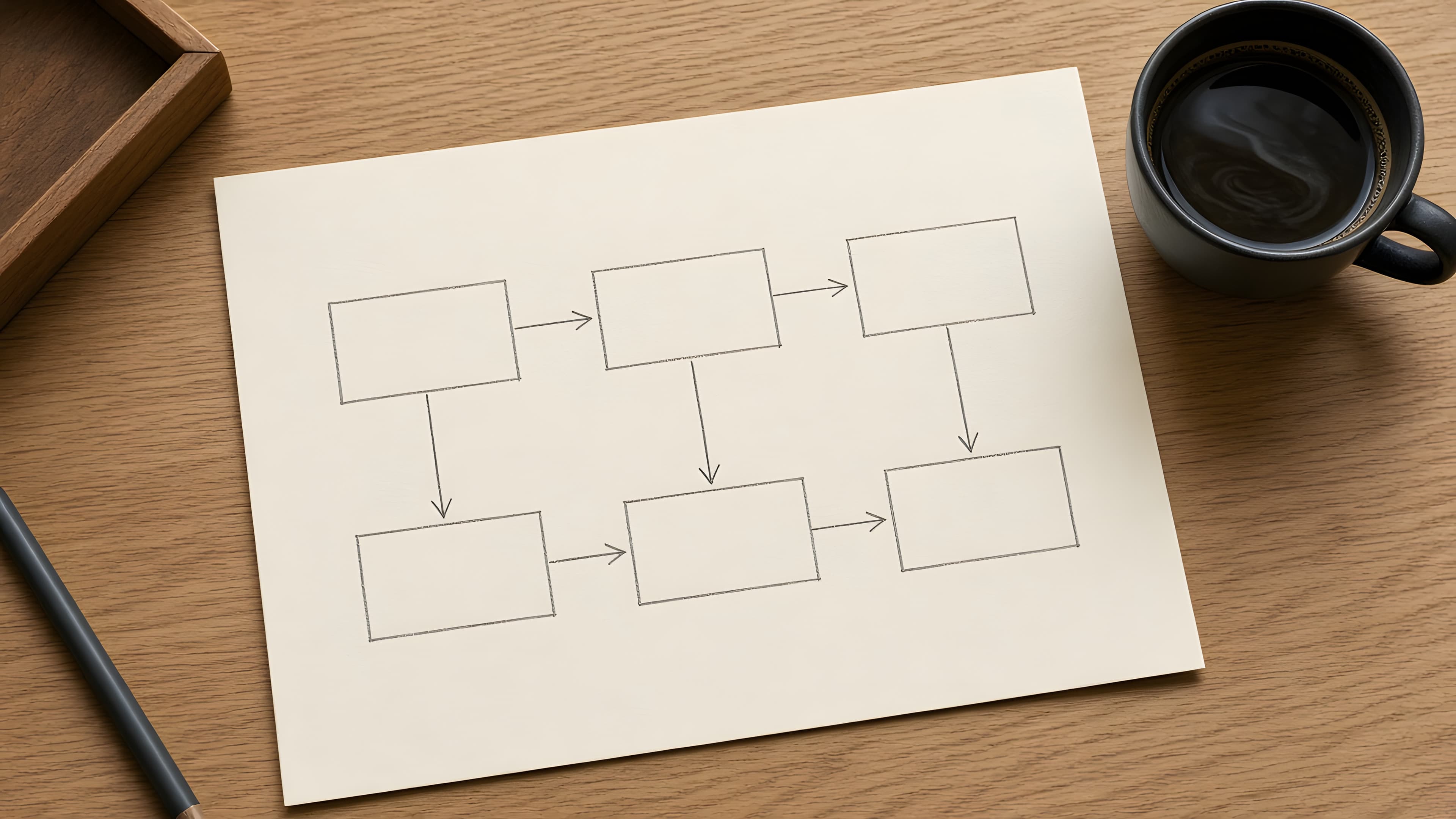
A process map is a shared picture of how work really moves. Without it, every ERP workshop becomes a debate about screens.
Draw what happened, not what the manual says
Take one order, one receipt, or one hire, and follow it. Who touched it, what they waited for, and where they left the official system. The official process and the lived process are rarely the same. Configuring the official one is how you buy a system people will bypass.
Do this with the people who perform the work. Managers remember the policy. Operators remember the exception, and the exception is usually where the time and the errors sit.
Make the handoffs visible
Most cost is not inside a task. It is between tasks: a form waiting for a signature, a quantity retyped, a status nobody updates. Mark those waits on the map. They are the improvement, whether or not you later buy software.
Name the owner of each handoff. "The team" is not an owner. A name is.
Agree the future before you configure
The cheapest change you will ever make is a pencil change on this page. Decide what will stop, what will stay, and what the system must enforce. Then, and only then, let a consultant turn it into configuration.
If you skip the map, the system becomes the map, and changing your mind later is a change request with a price.